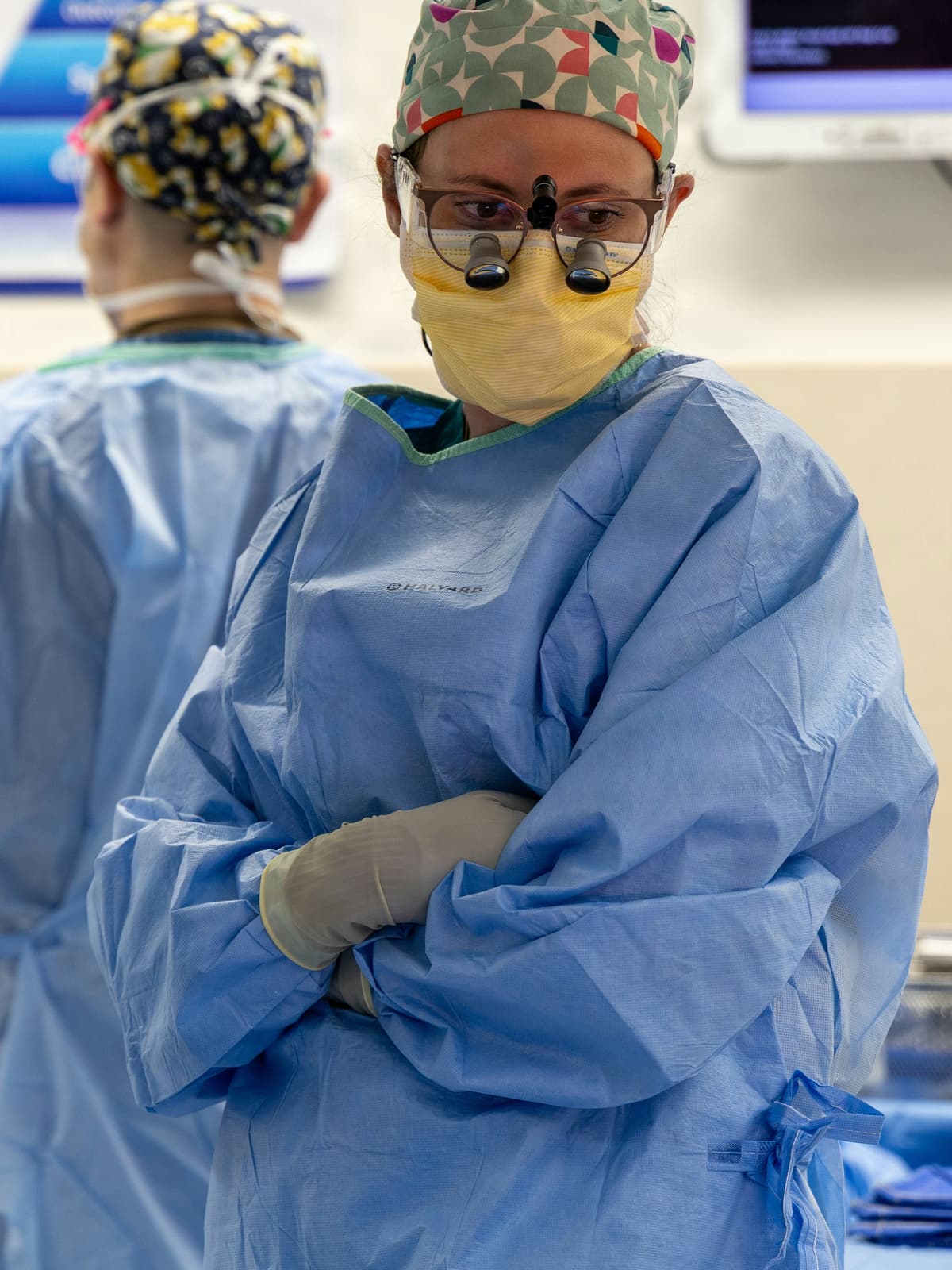
Revision Joint Replacement
A replacement that loosens, wears, becomes unstable, or gets infected needs a surgeon trained specifically for it. Revision is a different operation from the first one — longer, more technical, and far less forgiving of guesswork.
- Typical length
- Varies by case
- Going home
- Often requires a short stay
How it's approached
- 01
Fellowship-trained for the hard cases
Dr. Elbuluk's fellowship at UC San Diego centered on high-volume joint reconstruction, including complex revisions and periprosthetic joint infection.
- 02
Find the reason first
A painful replacement always has a cause — loosening, instability, infection, malposition, or something outside the joint entirely. Revising before you know why is how second revisions happen.
- 03
Rebuild for the long term
Bone loss is reconstructed and stability restored with the next twenty years in mind, not the next twenty months.
Recovery
What the weeks after
actually look like.
Day 0
Surgery, then first steps
Days 1–7
Home and moving
Weeks 2–3
Off the walker, back behind the wheel
Weeks 4–6
Back to work and out of the house
Also treated
Total Hip Replacement
Arthritis in the hip shows up as groin pain, a limp, and the slow disappearance of things you used to do without thinking.
Read moreTotal Knee Replacement
A knee replacement resurfaces the worn ends of the joint and rebalances the soft tissue around it.
Read morePartial Knee Replacement
When arthritis is confined to one compartment of the knee, there is no reason to replace the rest of it.
Read more

Next step
The consultation is where
you find out if you even need surgery.
Bring your imaging, your questions, and the list of things you've stopped doing. You'll leave with a plan — surgical or not — and a realistic timeline for getting back to them.