
Hip & knee replacement · Los Angeles
Back to your life.
Sooner than you think.
Fellowship-trained hip and knee replacement, built around one goal: the shortest honest path between the pain you have now and the life you had before it.
Now accepting Los Angeles consultations
Trained at
Princeton
Princeton University
A.B. 2013
UCLA
David Geffen School of Medicine
Doctor of Medicine, 2018
HSS
Hospital for Special Surgery
Residency, 2018–2023
UC San Diego
Adult Joint Reconstruction
Fellowship, 2023–2024
The difference
In, out, and moving.
All in the same day.
Joint replacement changed more in the last decade than in the thirty years before it. The hospital stay is gone. The narcotics are mostly gone. What's left is a one-hour operation and a recovery you can plan your calendar around.
- 01
Home the same day
The majority of hip and knee replacements no longer require a hospital stay. You're up and walking within hours of surgery and sleeping in your own bed that night.
Same day
Typical discharge
- 02
Built to hurt less
Pain control is planned before the first incision — regional blocks, long-acting local anesthetic, and scheduled non-narcotic medication. Opioids are a backup, not the plan.
Opioid-sparing
Pain protocol by default
- 03
Back to what you were doing
Golf, tennis, hiking, travel, chasing grandkids. The measure of a good replacement isn't the X-ray — it's whether you stopped thinking about the joint.
3 months
Typical return to full activity
The film
Meet the practice.
In his own words.
We're producing a short film with Dr. Elbuluk — inside the operating room, inside a consultation, and inside the recovery that follows. It lands ahead of the Los Angeles opening.
Approx. 2 min
Treatments
Two joints.
Nothing else.
A specialist practice built entirely around hips and knees — including the visits that end with a plan instead of a surgery date.

Total Hip Replacement
Arthritis in the hip shows up as groin pain, a limp, and the slow disappearance of things you used to do without thinking.
Read more
Total Knee Replacement
A knee replacement resurfaces the worn ends of the joint and rebalances the soft tissue around it.
Read more
Partial Knee Replacement
When arthritis is confined to one compartment of the knee, there is no reason to replace the rest of it.
Read more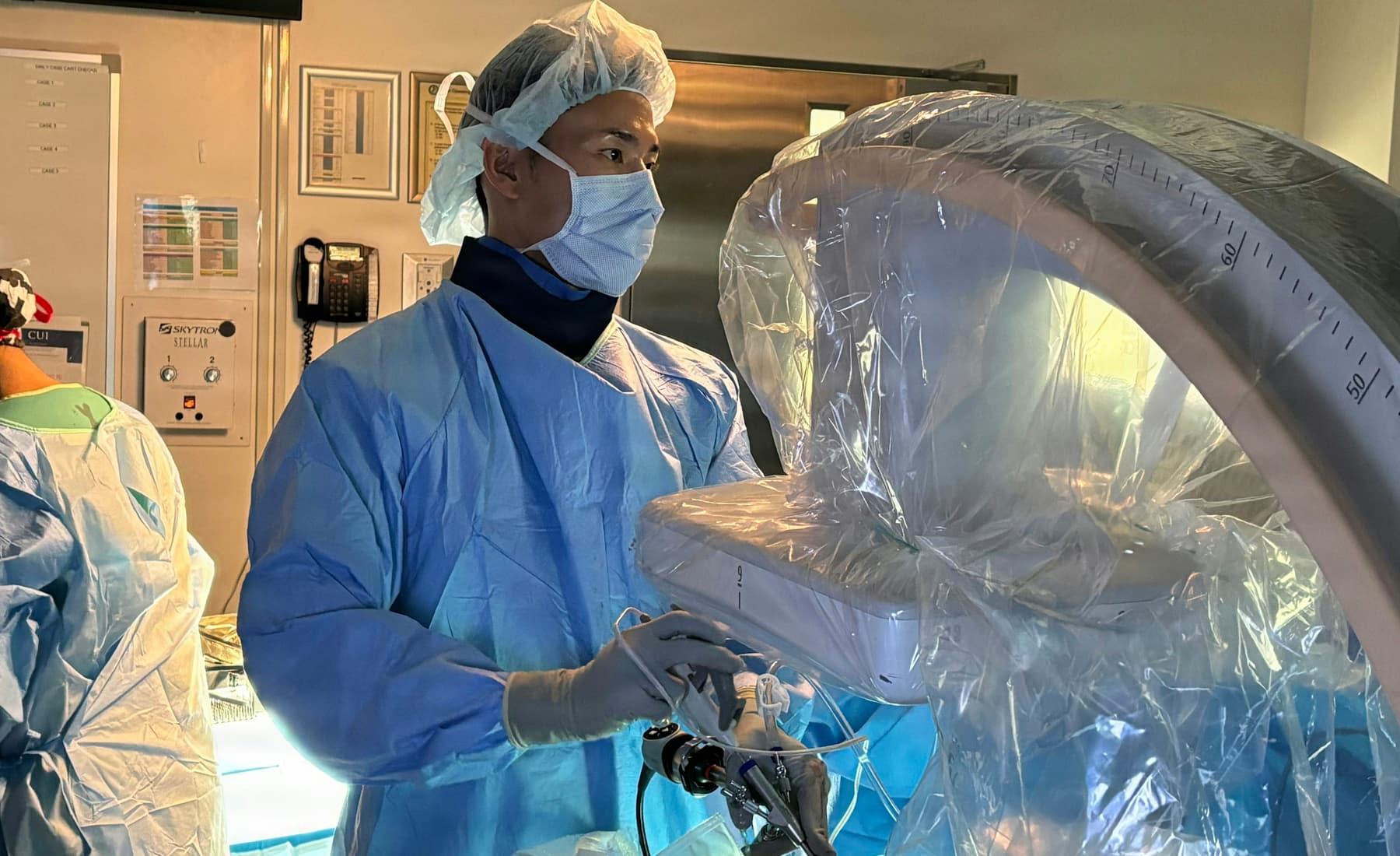
Robotic & Computer-Assisted Surgery
Robotic and navigation platforms turn a surgical plan into sub-millimeter execution.
Read more
Portrait session — in production
Meet your surgeon
Trained where the hardest
joints get sent.
Ameer Elbuluk, MD trained in orthopaedic surgery at the Hospital for Special Surgery in New York, then completed a fellowship in adult hip and knee reconstruction at UC San Diego. He is relocating to Los Angeles to build a practice around two questions: how fast can you get your life back, and how comfortable can the trip be?
5years
Orthopaedic residency at the Hospital for Special Surgery
40+
Peer-reviewed publications in orthopaedic surgery
2joints
Hips and knees. A specialist practice, not a general one.
1goal
Getting you back to the life you had before the pain
Recovery
The timeline, without
the optimism tax.
Every surgeon quotes a recovery. Here's the honest version — including the week that's genuinely hard, so nothing about it surprises you.
2–4 weeks before
Prehab and planning
Imaging, medical clearance, and a strength program for the muscles around the joint. Patients who go in stronger come out faster — this is the least glamorous and most predictive part of the whole process.
Day 0
Surgery, then first steps
Surgery takes about an hour. A regional block and long-acting local anesthetic are placed before you wake up. Physical therapy sees you the same afternoon, and most patients walk within a few hours and go home that evening.
Days 1–7
Home and moving
Short, frequent walks around the house. Ice, elevation, and a scheduled non-narcotic pain regimen. Most of the swelling and most of the discomfort live in this week — and then it starts to lift.
Weeks 2–3
Off the walker, back behind the wheel
Most patients transition to a cane and then to nothing. Driving typically resumes once you're off narcotics and can react normally — often around two to three weeks.

Los Angeles
A city that doesn't
sit still.
Los Angeles is a city of people who are outside — on the trails above the basin, on the courts, in the water, on the sidewalks with a dog and a coffee at seven in the morning. Arthritis takes that first, long before it takes anything else.
Dr. Elbuluk is relocating to Los Angeles to build a practice around exactly that problem: getting people back outdoors quickly, comfortably, and permanently.
Before you book
Questions people actually ask
Straight answers, including the ones that talk you out of surgery.
01Will I have to stay in the hospital?
Usually not. The large majority of primary hip and knee replacements are now done as outpatient procedures — you arrive in the morning and sleep at home that night. Patients with certain medical conditions, or those without support at home, may still be better served by an overnight stay, and that's decided with you well before the day of surgery.
02How much pain should I actually expect?
Real, but planned for. Pain control starts before the incision with a regional nerve block and long-acting local anesthetic, and continues with scheduled non-opioid medication, ice, and elevation. Most patients need far fewer narcotics than they expect, and many stop them within the first week.
03When can I drive again?
Typically two to three weeks, once you are off narcotic medication and can move your leg quickly enough to brake safely. Right-side surgery generally takes a little longer than left.
04How do I know if I actually need a replacement?
You probably don't need one yet if injections still work, if the pain is activity-specific rather than constant, or if you haven't given a real strength program a fair try. Replacement makes sense when arthritis is limiting the life you want to live and the non-surgical options have stopped delivering. That conversation is the point of the first visit.
05How long does a joint replacement last?
Modern hip and knee replacements are widely reported to last twenty years or more in the large majority of patients. Implant position, your activity, your weight, and bone quality all factor in — which is exactly why the precision of the first operation matters so much.

Next step
The consultation is where
you find out if you even need surgery.
Bring your imaging, your questions, and the list of things you've stopped doing. You'll leave with a plan — surgical or not — and a realistic timeline for getting back to them.